
Signature Maker
Document signing app shipped in 2 days, growing organically to €122 MRR
Timeline
Mar 2026 - 2 days
Stack
Swift, Kotlin, Gemini, Firebase
Result
Email signatures in 30 seconds
Context
Co-founder at 14x, an app studio. We shipped Signature Maker in 2 days. My co-founder built the iOS app (Swift, on-device ML), I built the Android app (Kotlin) and the backend. Claude Code was our primary dev tool. The AI document review feature runs on Gemini via a Firebase Cloud Function.
We didn’t set out to innovate. We noticed dozens of apps already solving this exact problem and wondered: are they all making money? Instead of researching further, we just built one.
The Problem
Signing a PDF on your phone should take 10 seconds. Instead, most people still print, sign, scan, and email. The apps that solve this are either bloated PDF suites with 50 features you don’t need, or they force you to draw a signature with your finger (which never looks like your real handwriting).
The problem was already well-defined and well-proven by competitors. We just needed to execute it cleanly.
The Solution
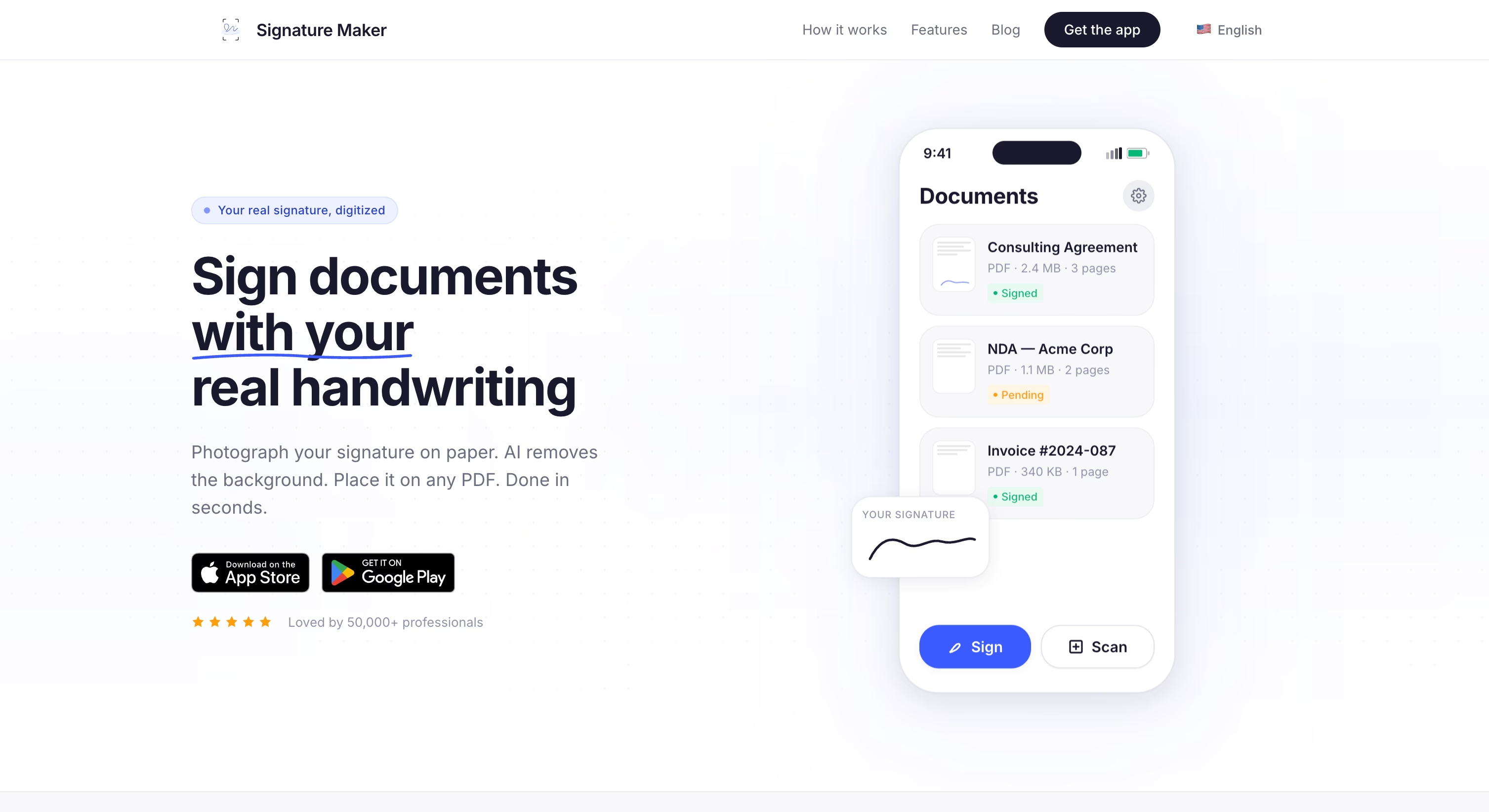
A single-purpose app with a dead-simple workflow: write your signature on paper with a pen, point your phone camera at it, on-device ML removes the background instantly, import any PDF, drag your signature where you need it, export.
We added a few extras that made it competitive: a document scanner with edge detection and perspective correction, AI-powered contract review (Gemini flags red flags and complex clauses before you sign), OCR full-text search across all your documents, and Face ID protection.
Everything stays on-device. No accounts, no cloud storage. Privacy was a deliberate product decision, not an afterthought.
The app ships in 43 languages, with localized screenshots for every locale.
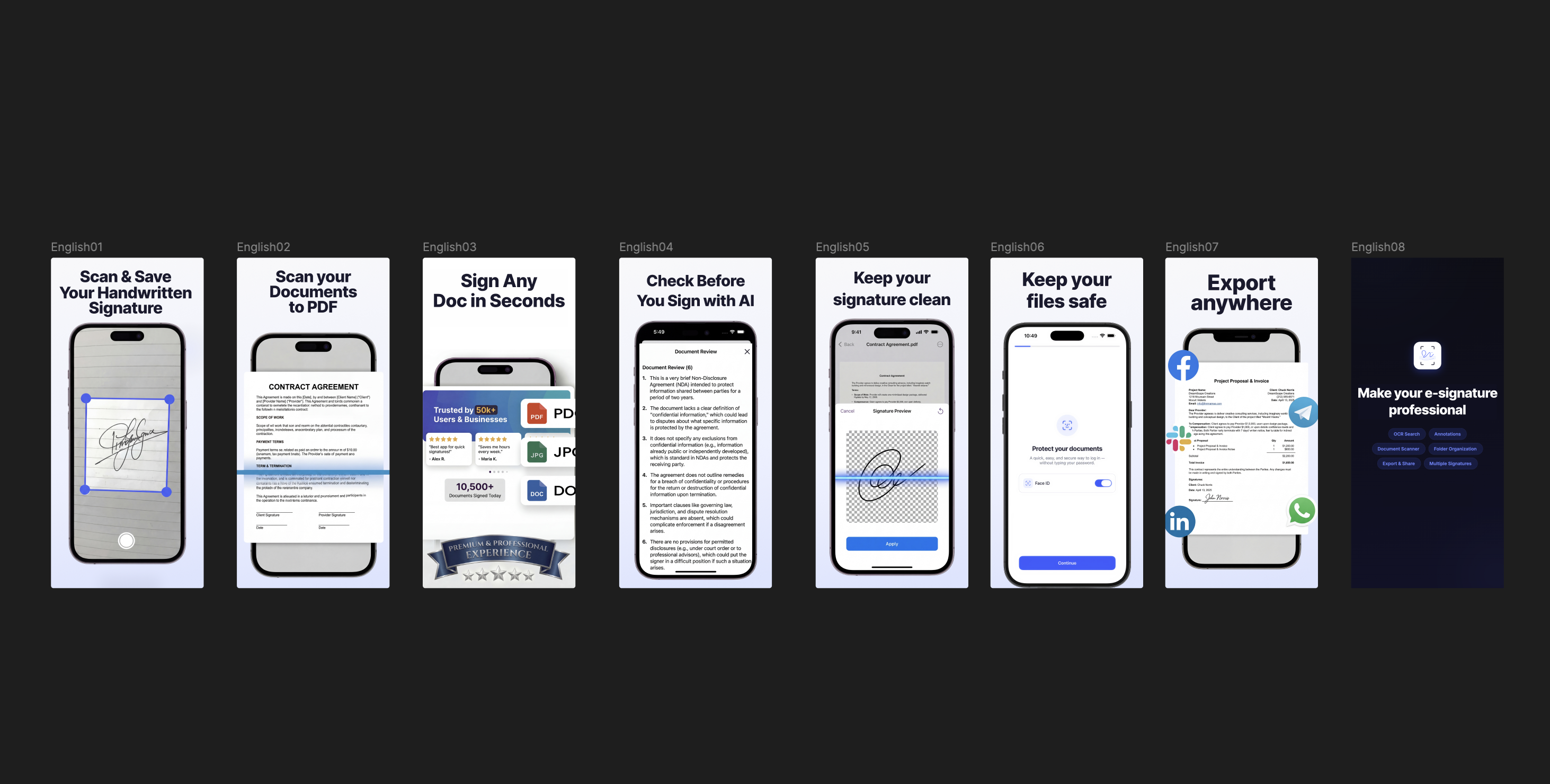 App Store screenshots across locales
Outcomes
The app grew to €122 MRR purely through organic App Store discovery (ASO). No marketing budget, no content strategy, just a well-optimized listing in 43 languages.
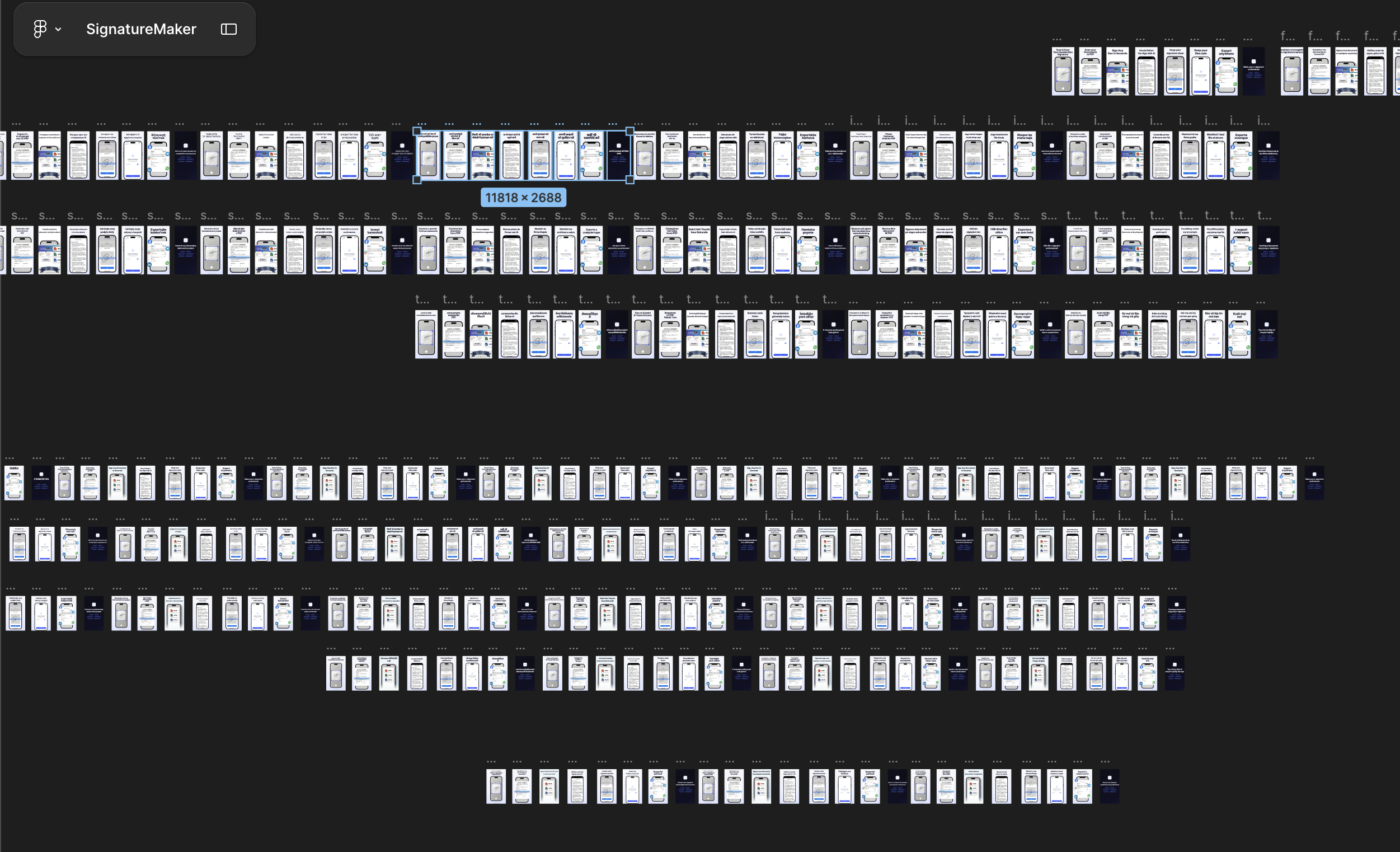 43 languages with localized store listings
We experimented with Apple Search Ads using our internal tool ASA Engine, but it didn’t move the needle. The document signing category is brutally competitive on paid keywords. Incumbents bid so aggressively that our budget barely got spent.
The organic channel works because the App Store rewards apps that solve a clear problem well. Good retention signals, solid ratings, and broad localization compound over time.
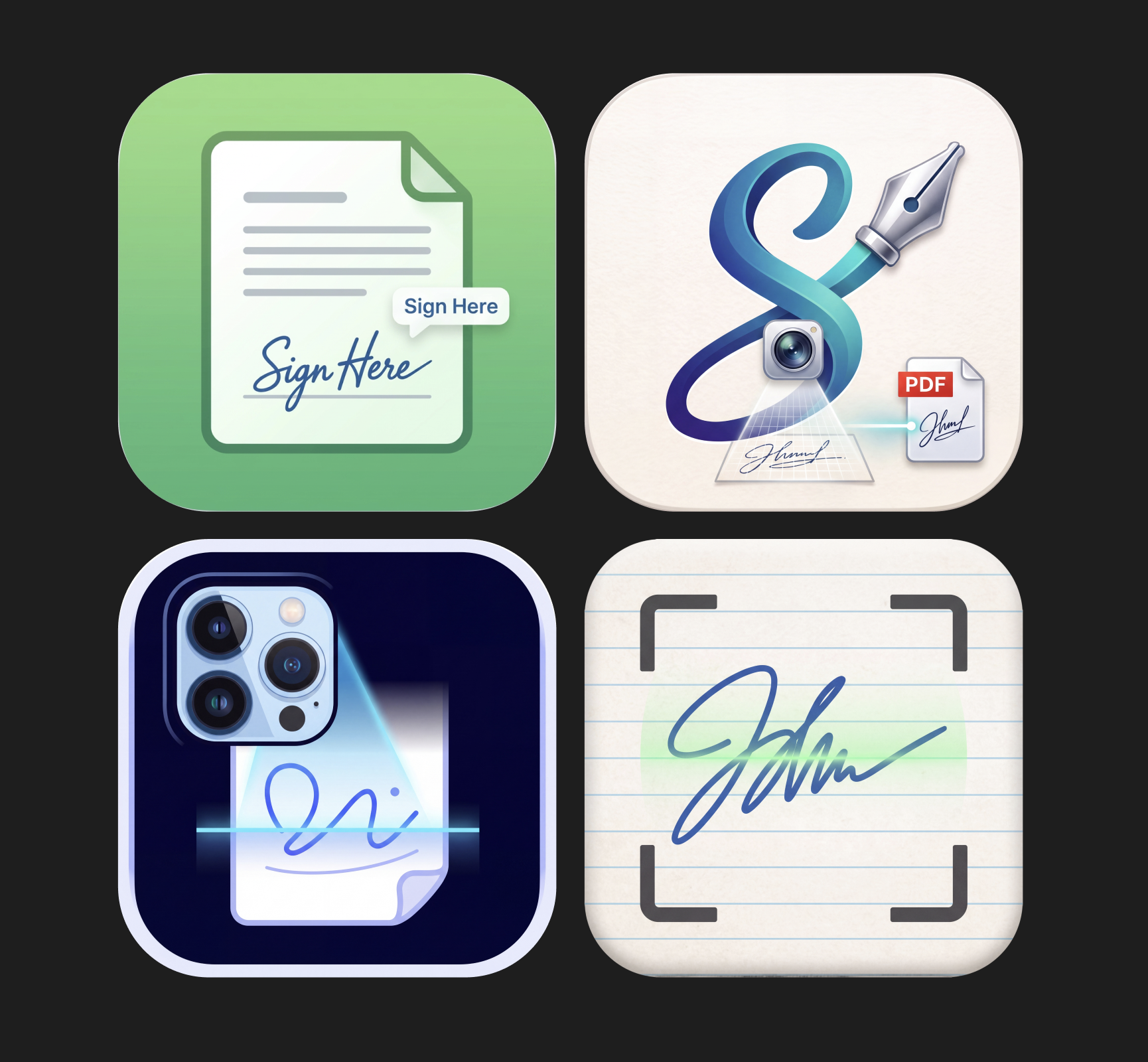 A/B testing store listing variants
Learnings
- Building on proven problems is stupidly easier. You skip the entire “does anyone want this?” phase. The competitors already validated the market for you.
- The App Store is a distribution advantage. If your app solves a real problem and you do proper ASO, the store drives organic downloads for free.
- Apple Ads in competitive categories is a trap. The economics don’t work for small players. Incumbents bid keywords up to the point where your budget doesn’t even get spent.